
Sewing Machine Needles: A Simple Guide to Better Stitching
If your stitching ever looks untidy, uneven, or just not quite right, you’re not alone - and it’s very rarely because you’re doing something wrong. At Barnyarns, one of the most common causes of sewing problems we see is something much simpler: the needle. The right needle can make sewing feel effortless. The wrong one can cause frustration, skipped stitches and thread breakage. This guide is here to help you understand why sewing machine needles matter, how to choose them, and when it’s time for a change.
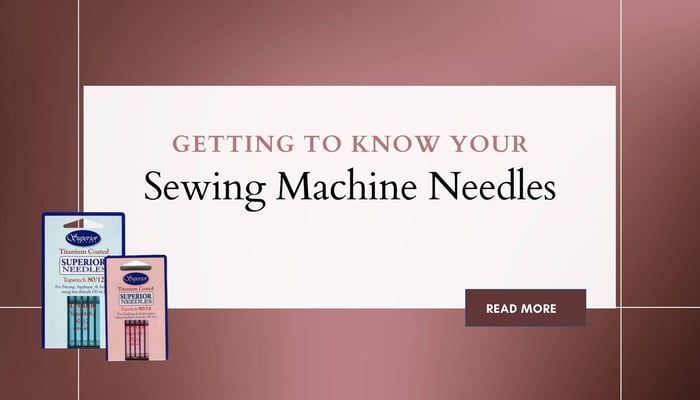
Superior Gold Titanium Topstitch Needles Size 80 (12) - Pack 5

£8.75
For ALL Home Machines (including Bernina)Titanium-coated needles have been available for longarm and industrial machines for many years, but these are the first titanium-coated Topstitch style needles made for home machines.Superior Threads (USA) and Organ Needle Company (Japan) have applied… read more
Table of Contents
"Great shop stocking all sorts of handy equipment for sewists. Excellent service helping you navigate a complex field" - SH
What do sewing machine needles actually do?
Your needle isn’t just making a hole in the fabric. As it moves up and down, it:
- Pierces the fabric cleanly
- Carries the thread through the fabric
- Helps form the stitch with the bobbin thread
If the needle struggles at any point, because it’s the wrong size, wrong type, or worn - stitch quality suffers immediately.
What happens when a needle is past its best?
A needle doesn’t need to snap to stop working properly. Over time it can become:
- Blunt, meaning it pushes fibres aside rather than piercing them
- Slightly bent, which interferes with stitch formation
- Damaged, with tiny burrs that catch and shred thread
This often shows up as:
- Skipped stitches
- Thread breaking or shredding
- Uneven or messy stitching
- Fabric puckering or pulling
Changing the needle is often the fastest fix.
Matching needle, fabric and thread (the golden trio)
One of the most useful things to understand is that needles don’t work alone. The fabric, thread and needle all need to suit each other.
As a general rule:
- Finer fabric → finer thread → smaller needle
- Heavier fabric → thicker thread → larger or specialist needle
For example:
- Quilting cotton + 50wt thread + 80/12 Universal or Microtex
- Denim + topstitch thread + 100/16 Topstitch or Jeans needle
Once this clicks, a lot of sewing “mysteries” disappear.
Needle sizes explained (with real examples)
Needle sizes are shown as two numbers, such as 80/12. The important thing is the relative size.
- Finer needles - 60/8 to 70/10
Best for lightweight fabrics like lawn, voile, silk and fine dress fabrics. These create neat stitches without leaving visible holes.
- Medium needles - 80/12 to 90/14
Your everyday sizes. Ideal for quilting cottons, linens and most general sewing projects. When in doubt, start here.
- Larger needles - 100/16 to 110/18
Designed for heavier fabrics, dense layers and thicker threads - perfect for denim, canvas, bag making and home décor.
Using a needle that’s too small can cause skipped stitches and thread breakage. Too large, and you risk damaging the fabric.
Needle types - when to use what
Different needle types are designed for specific jobs:
- Universal - A great all-rounder for woven fabrics and some knits. A staple for general sewing.
- Microtex (Sharp) - Extra sharp and slim, these are ideal for fine or tightly woven fabrics where precision matters. They shine when you want crisp seams, accurate piecing and straight stitching on fabrics like cotton poplin, lawn, silk and microfibres.
- Stretch / Jersey - Designed to slip between fibres rather than pierce them, helping prevent skipped stitches on knitted fabrics.
- Jeans / Denim - Strong, sharp needles for dense fabrics, thick seams and multiple layers.
- Topstitch - Larger eye and deeper groove, making them ideal for decorative threads, quilting threads and heavier sewing.
Titanium needles - are they worth it?
This is a question we’re asked a lot.
Superior Gold Topstitch Titanium needles are coated with titanium, which reduces friction and wear. The result:
- They stay sharper for much longer
- They cope exceptionally well with a wide range of thread types
- They’re ideal for long sewing sessions, dense fabrics and decorative stitching
For occasional sewing, standard sewing machine needles may be perfectly adequate. But if you sew regularly, use heavier threads, or want consistent results with fewer needle changes, titanium needles are well worth considering.
How often should you change your needle?
More often than most people expect.
We recommend fitting a new needle:
- At the start of a new project
- When changing fabric types
- After around 6 - 8 hours of sewing
If you notice thread shredding, skipped stitches, or a change in stitch quality, it’s always worth changing the needle first.
At Barnyarns we stock a wide range of sewing machine needles for every type of project. If you’re unsure which needle is right for you, just ask, we’re always happy to help.
Shop Now
FAQs
Can I use one needle for everything?
You can try, but results will improve dramatically if you match the needle to the job.
Why do needles have two numbers?
They show the same size using two different measuring systems. The bigger the number, the bigger the needle.
Does needle brand matter?
Quality and consistency do make a difference. We stock Schmetz and Superior because they’re reliable and trusted.
Can old needles damage my machine?
They’re unlikely to damage the machine, but they can certainly damage fabric and ruin stitching.